

Winter is beautiful — crisp mornings, cold air, quiet walks, and that calm feeling you only get when the world slows down.
But for dogs? Winter can be confusing.
Some dogs love cold weather.
Some dogs tolerate it.
And some dogs act like they’ve been personally betrayed by the first gust of wind.
What makes winter tricky isn’t just “temperature.”
It’s wind, moisture, snow contact, salt on sidewalks, and sudden changes like:
- walking from a warm home → into freezing air
- stepping in slush → then standing still
- wet fur → trapped cold
And this is exactly why winter dog wearables aren’t “one item.”
They’re a system.
Today we’re covering one of the most important (and rarely explained) skills for dog owners:
✅ How to layer dog wearables correctly — so your dog stays warm without overheating, chafing, or losing mobility.
Because in winter, comfort is not optional.
Why Layering Works Better Than “One Thick Coat”
A single thick jacket sounds smart… until it isn’t.
One thick layer can:
- restrict shoulder movement
- trap sweat and moisture
- rub the underarms
- fit poorly in the chest
- shift during walks
Layering fixes these issues because it allows:
✅ better temperature control
✅ better range of motion
✅ better breathability
✅ better fit (especially for broad chests)
✅ easy adjustments based on conditions
The goal is simple:
warm, dry, mobile.
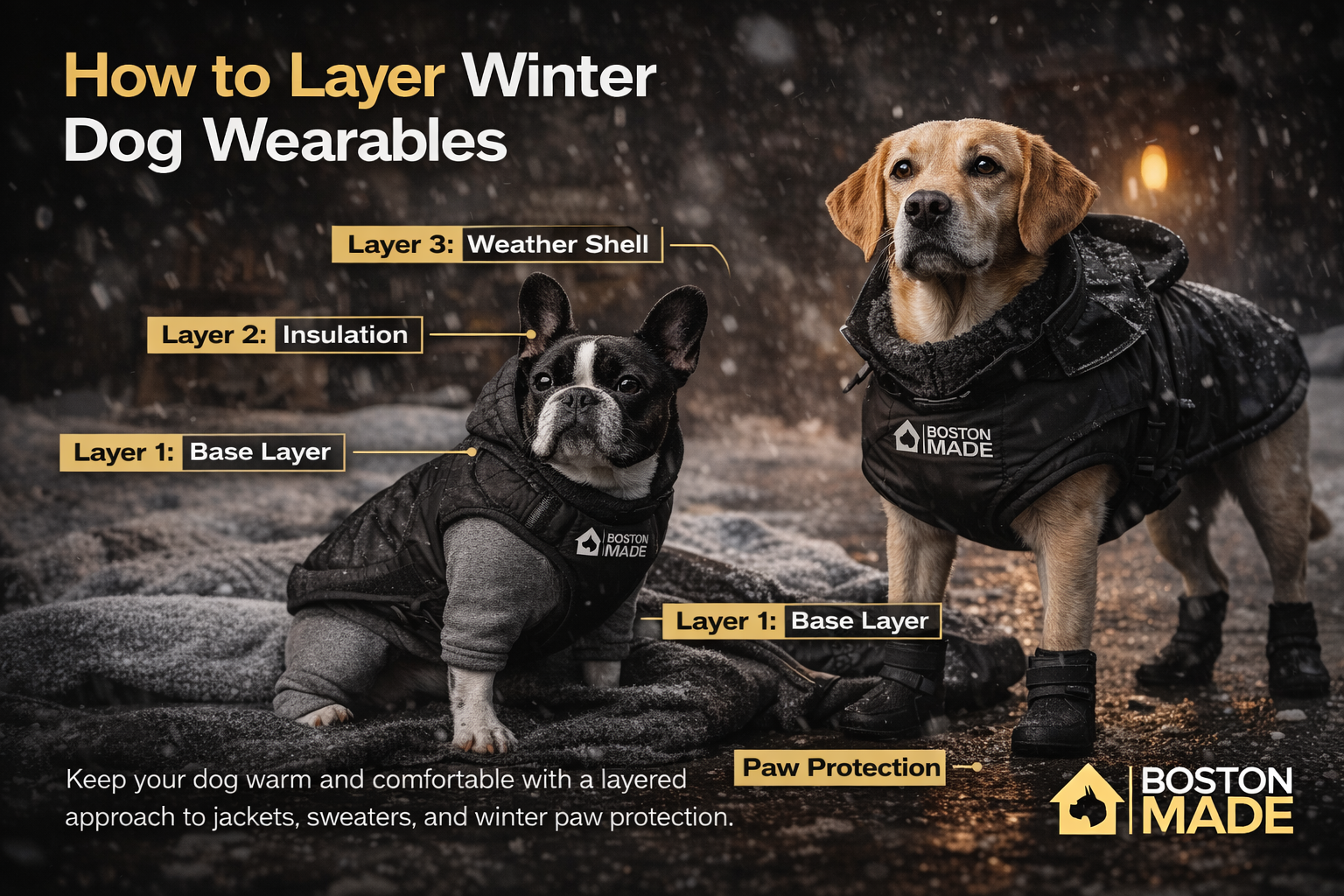
The 3-Layer System for Dogs
This is the same concept hikers use in serious conditions — just adapted for pups.
✅ Layer 1: Base Layer (Next to Skin / Fur)
Purpose: Comfort + warmth + moisture control
This layer should be:
- soft
- breathable
- flexible
- snug (but not tight)
Best wearables for Layer 1:
- dog pajamas
- onesies
- fitted knitwear
- lightweight underlayers
This is perfect for:
- short-haired dogs
- dogs who shiver indoors
- small dogs that lose heat fast
- elderly dogs
💡 Boston Made Tip:
A base layer is also the secret to preventing jacket rubbing.
✅ Layer 2: Insulation Layer (Warmth Retention)
Purpose: Trap warmth without bulk
This layer should:
- hold heat
- stay lightweight
- not compress too much under the outer shell
Examples:
- fleece jacket
- sweater layer
- quilted mid-layer
If you’re in areas where winter is “real winter,” this becomes essential.
✅ Layer 3: Outer Shell (Weather Defense)
Purpose: Wind + snow + moisture protection
This is where performance matters most.
The shell layer should:
- block wind
- repel water
- protect the chest/belly
- remain flexible at shoulders
Best wearables for Layer 3:
- windbreaker-style dog coats
- waterproof shell jackets
- insulated snow gear
✅ Especially important for dogs that get belly contact with snow.
How to Layer WITHOUT Overheating
Overheating is real — and most dog owners don’t realize it’s happening.
Dogs don’t sweat like we do. They cool through:
- panting
- paws
- ear/face areas
If your dog overheats in winter layering, you’ll see:
- heavy panting in cold air
- trying to stop the walk
- rolling in snow
- biting at clothing
- restlessness or agitation
The “10-Minute Check”
After 10 minutes outside:
- touch chest fur
- touch armpit area
- check for dampness
If damp = too much insulation.
Adjusting layering is simple:
- keep base layer
- remove insulation layer
- keep shell for wind
The 4 Winter Conditions (And What Your Dog Needs)
Not all winter days are equal.
1) Cold + Dry + Calm
✅ Base layer + mid layer
Optional shell
2) Cold + Windy
✅ Shell is REQUIRED
Wind chill hits dogs hard.
3) Wet + Slushy
✅ Shell + base layer
Avoid thick insulation that becomes damp.
4) Snow + Ice + Sidewalk Salt
✅ Paw protection becomes priority
Boots or paw wax + wipe down after.
Don’t Forget the 2 Most Neglected Areas: Chest & Belly
A lot of dog coats look warm — until you realize they only cover the back.
But the chest and belly are where:
- snow collects
- water splashes
- cold air hits directly
That’s why layering matters.
A base layer keeps warmth in.
A shell keeps wetness out.
Winter Boots: When Are They Necessary?
Not all dogs need boots 24/7.
But boots become necessary when:
- salt is on roads/sidewalks
- ice is sharp
- snow balls up between toes
- your dog lifts paws repeatedly
Signs your dog is in pain:
- limping
- licking paws immediately after walk
- refusing to continue
If boots aren’t an option:
Use paw balm + wipe paws after every walk.
The Biggest Mistake: Bulky Clothing That Changes Your Dog’s Gait
This matters.
If clothing affects how your dog walks, it can cause:
- joint strain
- shoulder restriction
- soreness
- “freezing” behavior
A properly layered wearable system should keep your dog:
✅ warm
✅ dry
✅ moving naturally
Boston Made Pets Philosophy: Winter Wearables Should Feel Effortless
Winter wearables aren’t a costume.
They’re gear.
Your dog should look premium — yes — but most importantly, your dog should feel:
- protected
- comfortable
- free to move
- excited to step outside
That’s what we build for.
Because winter isn’t meant to stop your dog from living life.
It’s just another season… that your pup deserves to experience safely.