

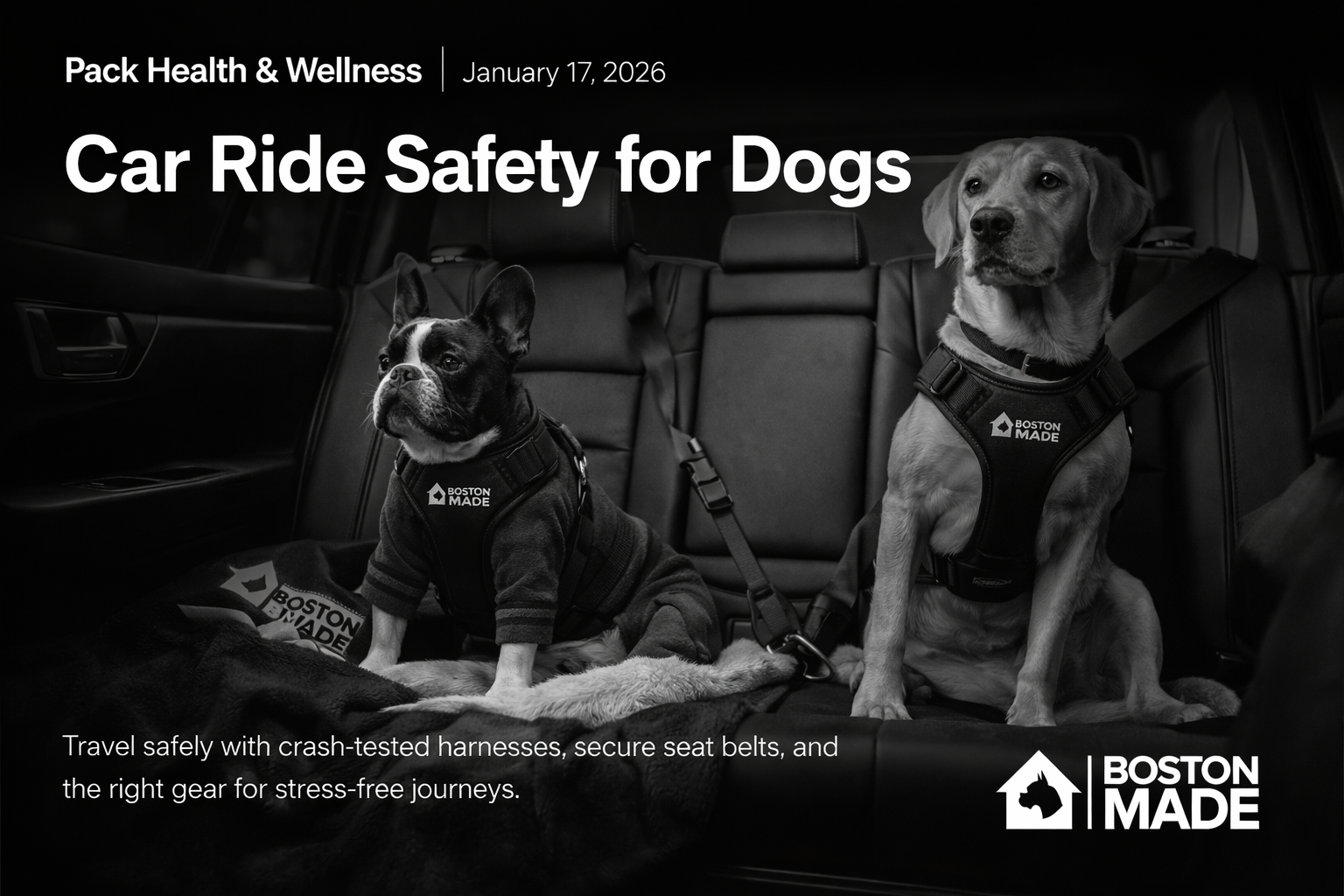
For a lot of dogs, the car ride is everything.
It means:
- adventure
- the park
- a pup cup
- visiting family
- the groomer
- the vet (unfortunately)
- or just being included in your life
But here’s the truth that most dog owners never think about until something goes wrong:
✅ Car rides are one of the most dangerous parts of a dog’s routine.
Not because you’re a bad driver.
Not because your dog is “wild.”
But because dogs are often riding in cars with:
- no restraint
- no protection
- no stability
- no safe positioning
Which means one hard brake… one sudden swerve… one accident… and things can become tragic instantly.
So today we’re going deep into a topic that’s honestly more important than most people realize:
car ride safety for dogs — how to travel safely using harnesses, seat belts, and travel wearables the right way.
This is not fear-based.
This is love-based.
Why Car Safety for Dogs Matters So Much
When a dog is loose in a car, several risks exist:
✅ Risk #1: Injury in a crash
In an accident, a loose dog becomes a projectile.
✅ Risk #2: Injury in sudden braking
Even a “normal” brake can launch a dog forward.
✅ Risk #3: Distraction
Loose dogs climb into laps, block mirrors, or move under pedals.
✅ Risk #4: Escape risk
After a crash or sudden stop, scared dogs often bolt.
That’s why the goal isn’t “keep the dog from moving.”
The goal is:
✅ stable + secure + comfortable
The Correct Options for Safe Dog Travel
✅ Option 1: Crash-Safe Harness + Seat Belt Tether
This is one of the best everyday setups.
A good travel harness:
- distributes pressure across the chest
- avoids the neck
- keeps the dog seated or lying down
- reduces movement forward during stops
A seat belt tether connects:
- harness → seat belt system
Key rule:
❌ Never clip a seat belt tether to a collar.
Always harness.
Because in a sudden stop:
a collar can severely injure the neck/trachea.
✅ Option 2: Travel Crate (Most Secure)
For many dogs, a properly secured crate is ideal.
Benefits:
- dog stays contained
- less panic for anxious dogs
- reduced risk of distraction
- safest for long trips
Best for:
- larger dogs
- high-energy dogs
- anxious dogs
- long highway driving
✅ Option 3: Booster Seat + Harness (Small Dogs)
Small dogs often:
- slide around more
- panic more easily
- want to see out the window
A booster seat helps:
- keep posture stable
- reduce motion anxiety
- protect spine during braking
Still requires:
✅ a harness connection
What Makes a Harness “Car Ride Safe”?
Not all harnesses are equal.
A car ride harness must:
✅ have strong stitching
✅ handle load distribution
✅ fit snug without restricting breathing
✅ have reinforced connection points
✅ allow natural sitting posture
A loose harness is dangerous because:
- dog can slip out
- pressure points shift
- tether pulls awkwardly
The 5-Minute Harness Fit Test (For Car Rides)
Before travel, check:
✅ 2 fingers under straps
✅ no rubbing behind front legs
✅ chest plate sits centered
✅ no twisting straps
✅ dog can sit naturally
A correct fit is:
- stable
- secure
- comfortable
A correct fit should feel like:
a seat belt — not a straightjacket.
Where Should Your Dog Sit in the Car?
Best positioning:
✅ Back seat
Avoid:
❌ Front seat
Why?
- airbags can severely injure dogs
- front seat increases distraction
- front seat increases crash injury risk
If your dog rides in the front for any reason:
Keep them secured AND move seat far back.
But ideally:
✅ back seat always
Travel Wearables: Comfort Matters Too
Safety is the priority — but comfort prevents stress behaviors.
Dogs often shake, pace, or bark in cars because:
- they feel unstable
- they can’t balance
- the seat is slippery
- the environment feels chaotic
Travel comfort wearables:
✅ soft base layer
✅ cozy knit layer
✅ travel blanket
✅ calming wrap (for anxious dogs)
A familiar wearable also helps reduce stress because it smells like home.
Motion Sickness & Anxiety: The Hidden Travel Issues
Signs of motion sickness:
- drooling
- licking lips
- yawning repeatedly
- whining
- vomiting
- refusing to get in car
What helps:
✅ smaller meals before travel
✅ ventilation
✅ stable seating
✅ gradual practice rides
If severe:
talk to your vet about motion support.
Signs of travel anxiety:
- shaking
- panting heavily
- pacing
- barking nonstop
- digging at seats
- trying to climb forward
What helps:
✅ secure harness + stable positioning
✅ chew toy
✅ calming treat
✅ cover crate (if crated)
✅ predictable routine
The “Emergency Stop” Reality Check
Here’s a mental test every dog owner should do:
If I slam the brakes right now… is my dog safe?
If the answer is no:
you need a travel harness + restraint system.
Because even if you never crash…
Every single driver eventually has to emergency stop at some point.
Boston Made Pets: Wearables That Support a Real Dog Lifestyle
Your dog is your family.
Which means your dog rides with you:
- on errands
- to parks
- on trips
- through life
And they deserve the same protection we expect for ourselves:
✅ safety
✅ comfort
✅ stability
✅ care
The right harness isn’t just “dog gear.”
It’s peace of mind.
And the moment you secure your dog properly for travel — you feel it.
It’s one less thing to worry about…
So you can focus on the journey together.