Dear Sir or Madam,
Because the wrong choice can lead to choking, anxiety, escape risk, or long-term neck strain.
Every dog owner eventually asks this question:
“Should my dog wear a collar or a harness?”
And most people assume the answer is simple.
But at www.bostonmadepets.com, we take a different view:
It’s not “collar vs harness.”
It’s “what’s safest and most comfortable for
your dog
.”
Because collars and harnesses aren’t just accessories.
They’re control systems.
They affect:
- breathing
- neck and spine
- confidence on walks
- pulling behavior
- reactivity
- safety in public places
So let’s break it down clearly — without hype, without guilt, and without confusion.
The Job of a Collar (What It’s Actually For)
Collars are excellent for:
✅ identification
✅ tags
✅ quick leash connection for calm dogs
✅ light control in controlled environments
A collar is not always meant for:
- pulling dogs
- reactive dogs
- dogs with trachea sensitivity
- dogs who lunge
Collars place pressure on the neck — and the neck is a delicate area.
That’s why we teach at www.bostonmadepets.com:
Collars are great — but not always the best “walking tool.”
The Job of a Harness (What It’s Actually For)
Harnesses are designed to:
✅ spread pressure across the chest and body
✅ reduce strain on the neck
✅ give better control for many dogs
✅ support training and confidence
A harness is often the safest choice for:
- puppies
- small dogs
- pullers
- dogs with breathing issues
- dogs prone to backing out of collars
At www.bostonmadepets.com, we often recommend harness-first walking because it tends to create less stress physically and emotionally.
When a Collar Can Be Harmful
Collars can create issues when used for leash pulling.
Risks include:
- choking
- trachea irritation
- coughing
- gagging
- neck strain
- increased anxiety on walks
Some dogs are especially vulnerable:
Dogs who need extra collar caution:
- Yorkies
- Chihuahuas
- Pomeranians
- Pugs / Frenchies
- dogs with collapsed trachea risk
- dogs with respiratory sensitivity
If your dog coughs after pulling on a collar — that’s not “normal.”
That’s a sign to switch systems.
When a Harness Can Be Harmful (Yes, It Can)
Harnesses aren’t automatically perfect.
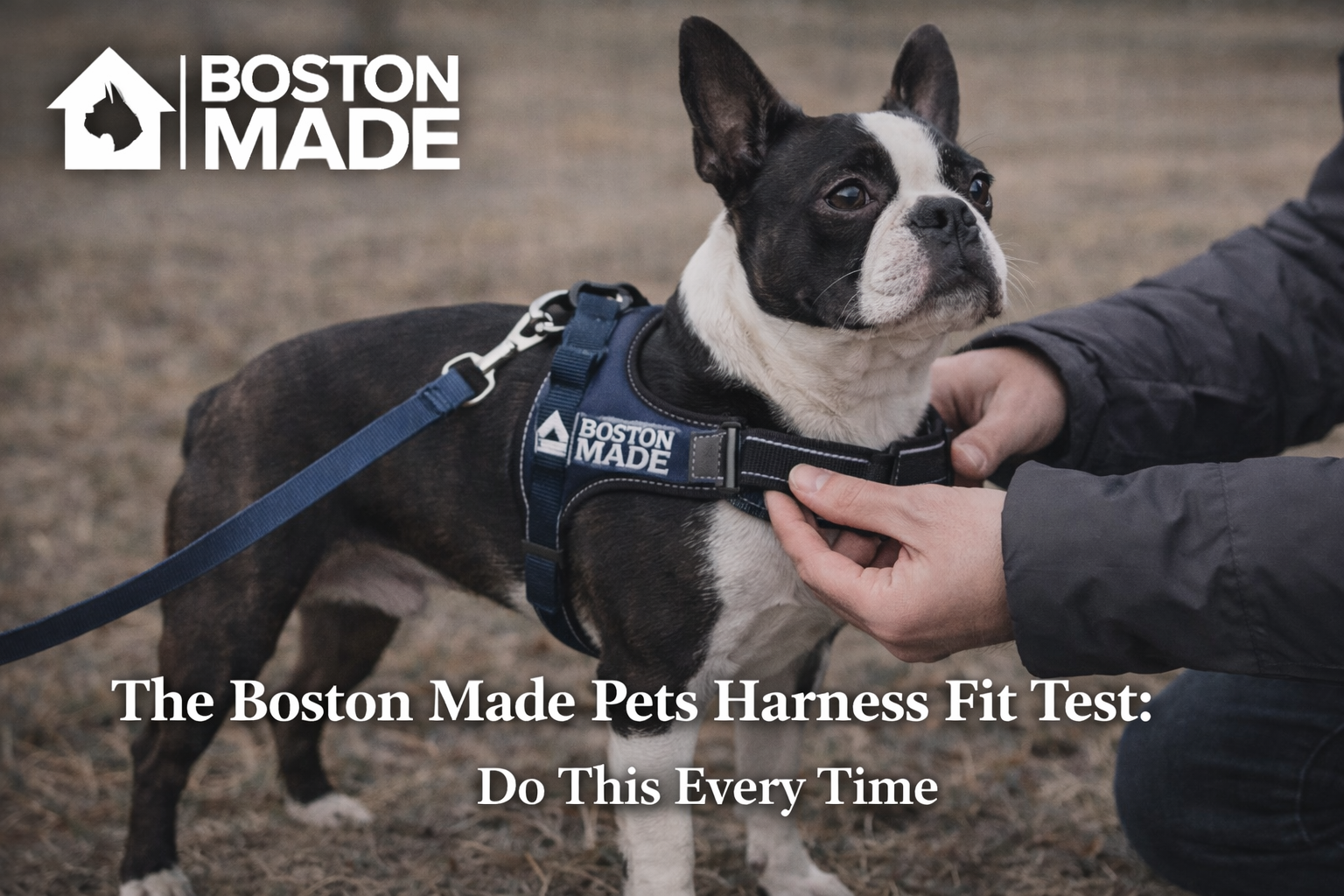
A poor harness fit can cause:
- armpit rubbing
- restricted shoulder movement
- twisting
- uneven pressure
- discomfort and refusal to walk
At www.bostonmadepets.com, we always say:
Harnesses are safer than collars
only when they fit correctly.
The best harness in the world is still wrong if it’s:
- too tight
- too loose
- sitting in the armpits
- restricting stride
Collar vs Harness: The Boston Made Pets Comparison
Here’s the clean breakdown:
✅ Best use for collars:
- ID tags
- chill leash walks
- trained loose-leash dogs
- backyard potty breaks
✅ Best use for harnesses:
- daily walks
- pullers
- training
- busy streets
- dogs that lunge/react
- dogs who slip collars
What About “No-Pull Harnesses”?
A lot of people buy no-pull harnesses hoping they will “fix” pulling instantly.
No-pull harnesses can help, but they’re not magic.
At www.bostonmadepets.com, we view them as:
✅ a training tool
not
❌ a shortcut
If your dog pulls hard, you still need:
- consistency
- calm handling
- reward-based training
- proper fit and comfort
The Biggest Problem: Most Dogs Wear the WRONG Size
This is what causes most of the collar/harness debate.
Many dogs:
- wear collars too tight
- wear harnesses too loose
- have gear sitting in the wrong zones
Comfort problems become “behavior problems.”
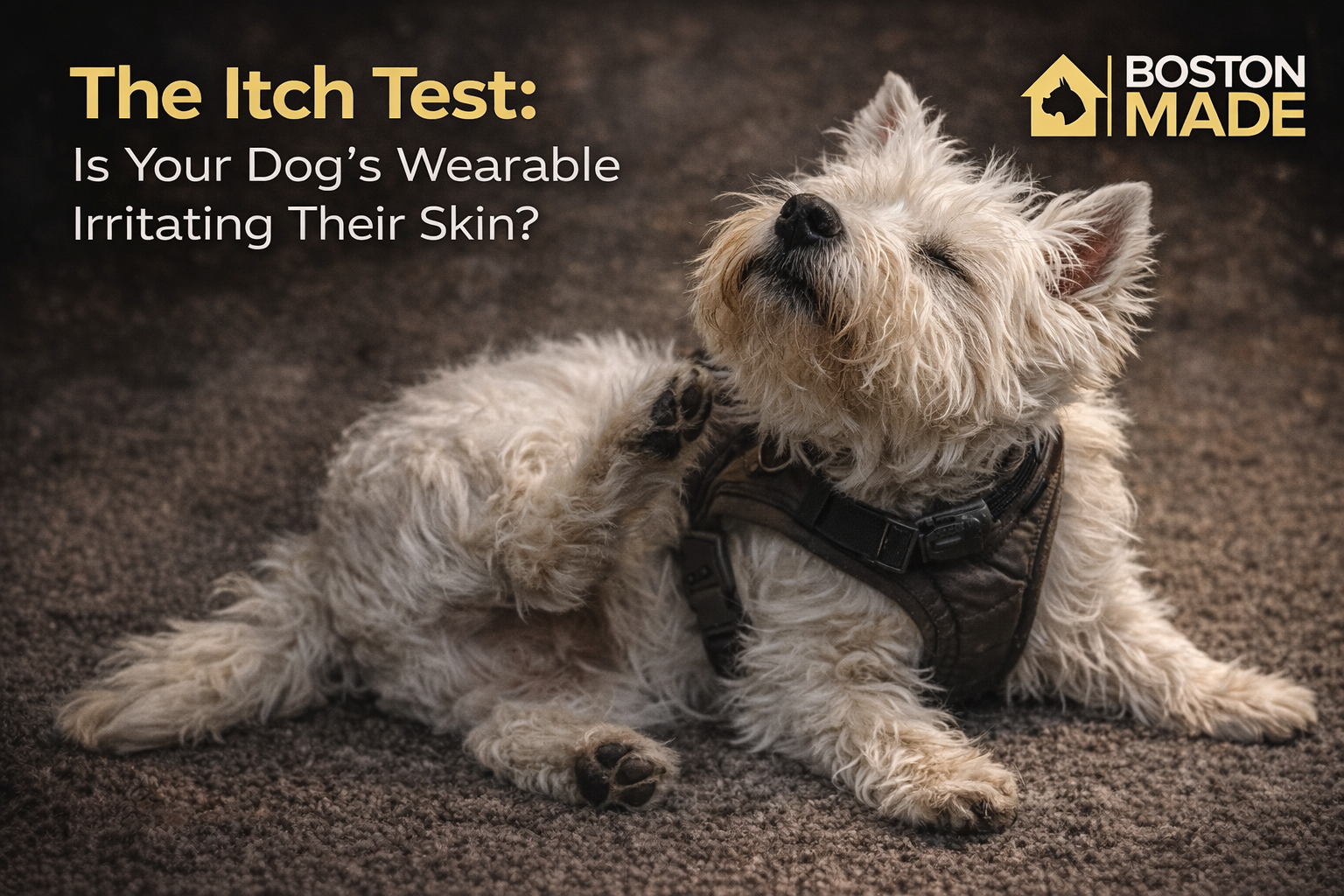
So if your dog hates walks, scratches at the gear, or freezes?
It may not be your dog’s attitude.
It may be the fit.
And fit is what we’re obsessed with at www.bostonmadepets.com.
The Boston Made Pets Safety Setup (Best Practice)
If you want the safest setup for most dogs:
✅ Collar = ID only
Collar stays on for tags.
✅ Harness = walk system
Harness connects to leash for daily walking.
✅ Backup clip (optional but smart)
Some pet parents use a double connector for added safety if escape is a risk.
This creates:
- comfort
- safety redundancy
- confidence
Final Thought: Comfort Creates Better Behavior
Here’s the biggest truth we’ve learned:
When dogs are comfortable, they behave better.
They:
- pull less
- freeze less
- resist less
- enjoy walks more
That’s why Boston Made Pets is built around wearables that prioritize:
- comfort
- mobility
- fit accuracy
- safety-first design
For more fit education, wearables guidance, and dog comfort resources, visit www.bostonmadepets.com.
collar vs harness, should dogs wear harness or collar, dog walking safety, dog collar safety, dog harness benefits, best harness for dogs, best collar for dogs, dog pulling leash collar, dog coughs on collar, harness vs collar for small dogs, harness for yorkies, harness for puppies, no pull harness guide, dog harness fit, dog collar sizing, dog gear guide, dog wearables safety, Boston Made Pets, www.bostonmadepets.com