Dear Sir or Madam,
Dogs don’t complain the way humans do.
They don’t say:
- “This tag is scratching me.”
- “This fabric is too hot.”
- “This strap is rubbing my skin raw.”
Instead, they communicate in smaller ways — the kind of signals that are easy to miss if you don’t know what to watch for:
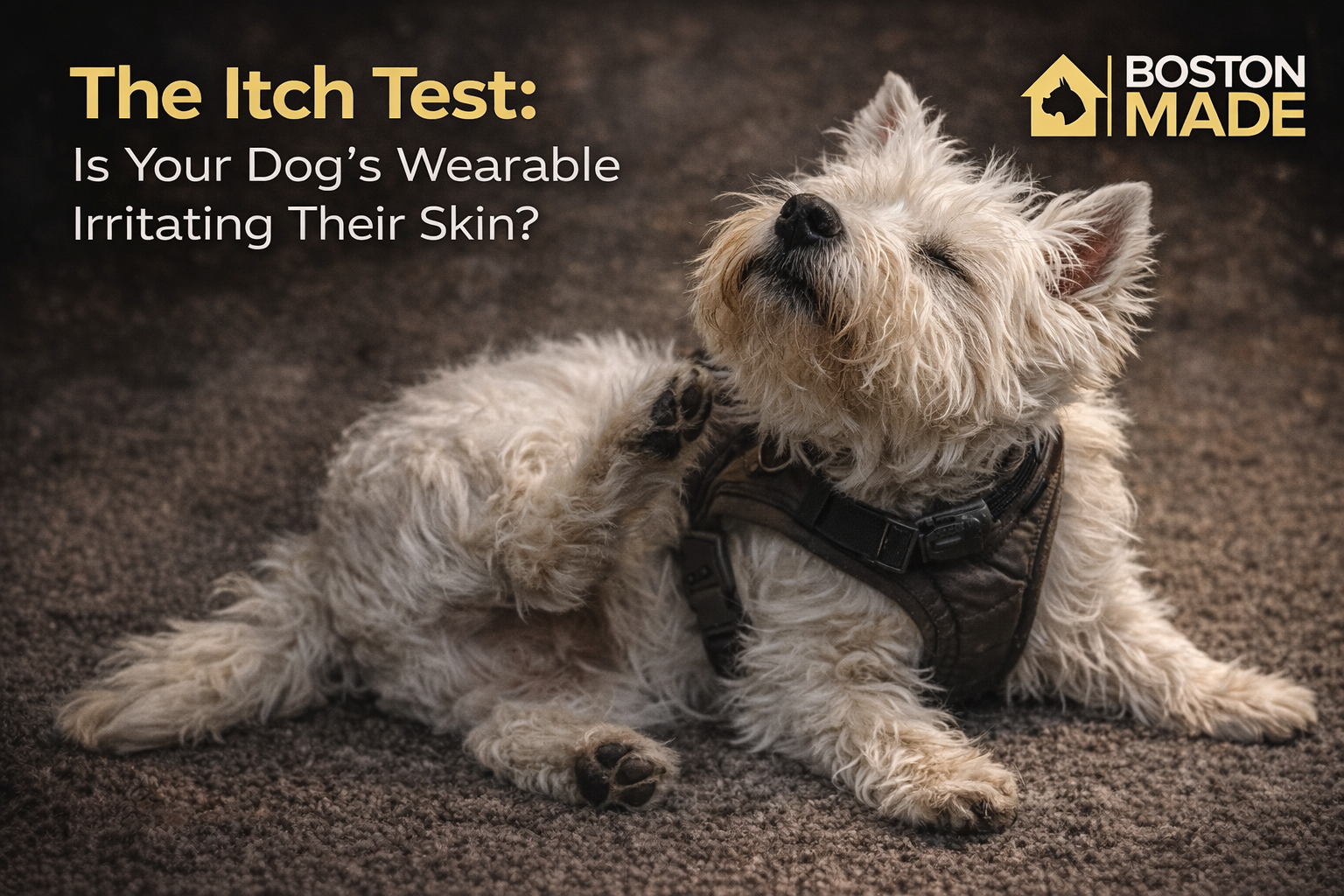
- scratching more than usual
- licking one spot repeatedly
- rolling around on the floor
- biting at a jacket or harness
- acting “off” during walks
- refusing to wear something they used to tolerate
And one of the most common reasons this happens?
✅ skin irritation caused by poorly-fitted or low-quality wearables
This is especially important for modern pupwear — because the more dogs wear clothing (pajamas, sweaters, coats, harnesses), the more their skin becomes impacted by:
- friction
- heat
- trapped moisture
- allergies
- tight points
- poor material
At Boston Made Pets, we believe dog wearables should enhance your dog’s comfort — not create problems.
So today we’re covering an important topic that almost no one talks about clearly:
how to tell if your dog’s wearables are irritating their skin, and exactly how to fix it.
We’re calling it:
✅ The Itch Test.
Why Wearables Cause Itching (Even When They Look Fine)
Irritation doesn’t always mean something is “wrong.”
Sometimes it’s a small combination of issues:
- fabric texture + heat + moisture
- harness pressure + movement
- seams rubbing in motion
- jacket shifting during walks
Most irritation falls into these categories:
1) Friction
Repeated rubbing creates inflammation.
2) Heat + trapped moisture
Moisture doesn’t just mean rain — it means:
- sweat
- damp fur
- melted snow
- humidity under the fabric
3) Allergies / sensitivity
Some dogs react to:
- detergents
- fabric dye
- synthetic blends
- poor quality finishes
4) Fit issues
Even premium gear can cause irritation if it’s too tight or shifts.
The Itch Test (Step-by-Step)
Run this test if your dog wears:
- harnesses daily
- jackets/coats regularly
- pajamas indoors
- any snug-fit pupwear
✅ Step 1: The Behavior Check
If your dog starts doing any of these, it’s a red flag:
- biting at straps
- scratching right after you put gear on
- freezing / refusing to walk
- shaking like something is “on them”
- rubbing their body on furniture
Even subtle changes matter.
Dogs don’t fake discomfort.
✅ Step 2: The “Hot Zones” Inspection
Take off the wearable and inspect these areas:
🔥 Underarms (armpits)
This is #1 irritation zone.
🔥 Chest
Especially where straps meet.
🔥 Belly
Clothing can trap moisture here.
🔥 Neck and shoulder line
Especially under collars or high straps.
🔥 Inner thighs (for onesies)
Tight-fit clothing can rub.
Look for:
- redness
- bumps
- thinning hair
- flaky skin
- dampness
- odor
✅ Step 3: The 10-Minute Sweat Check
Put on the wearable, let your dog move normally for 10 minutes.
Then check:
- chest fur
- underarms
- belly
If fur is warm and damp:
✅ wearable is trapping heat/moisture
(or your dog needs fewer layers)
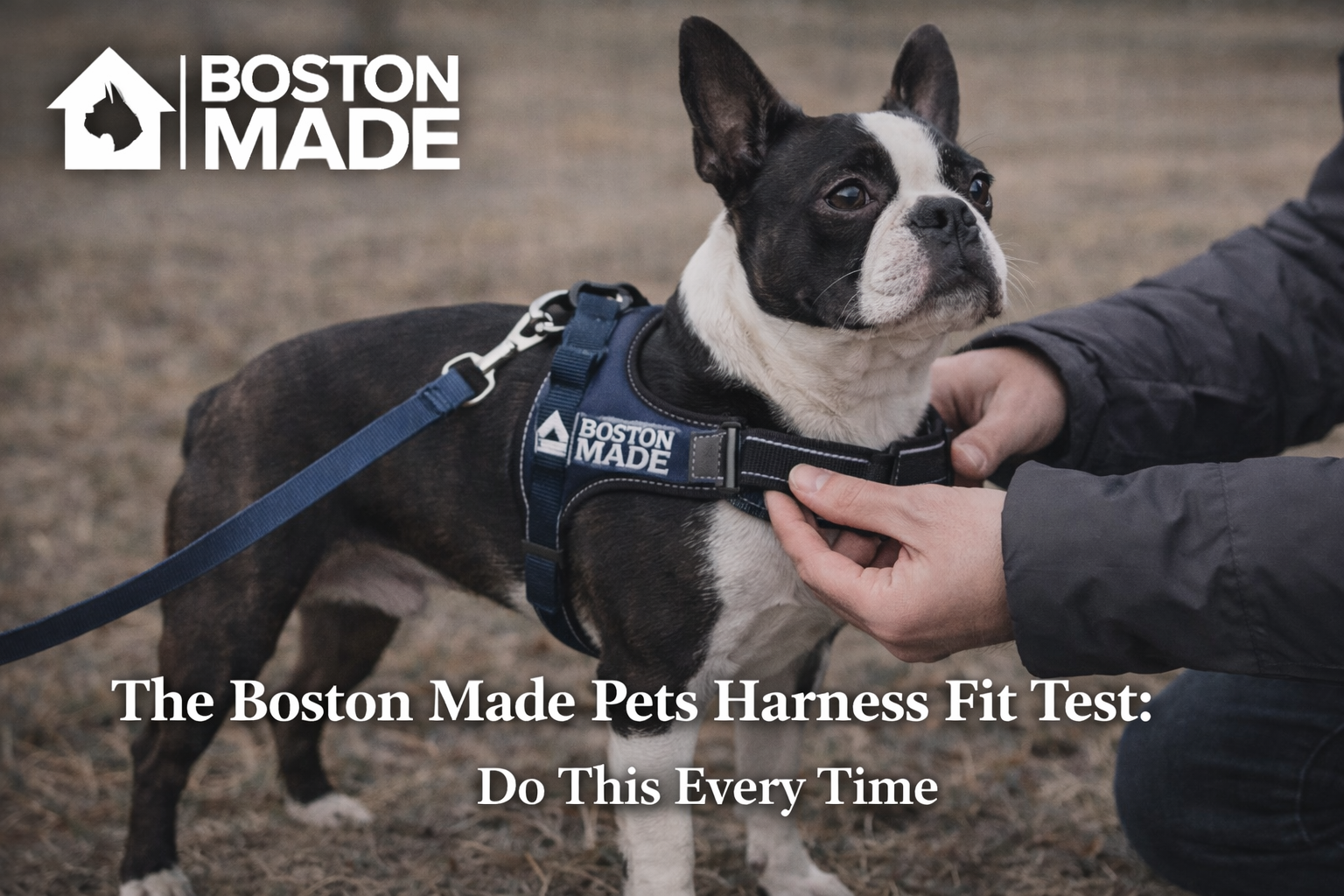
✅ Step 4: The Two-Finger Fit Test (Always)
This is the golden rule.
You should fit two fingers under:
- chest strap
- neck strap
- belly strap
If you can’t, it’s too tight.
If you can fit four fingers, it’s too loose (and may shift + rub).
Common Irritation Problems (And Fixes That Actually Work)
Problem 1: Harness Rubbing Underarms
Signs:
- redness under front legs
- hair loss in armpit area
- dog becomes hesitant on walks
Fix:
✅ adjust harness higher on chest
✅ choose better “movement cut” harness
✅ add base layer (pajamas/undershirt)
Yes — a base layer often solves harness irritation immediately.
Problem 2: Jacket Causes Itching After Walk
Signs:
- scratching after removing jacket
- biting at chest/belly area
Fix:
✅ check for damp fur trapped under coat
✅ use breathable base layer
✅ avoid overly thick single-layer coats
✅ layer instead of bulk
Problem 3: Pajamas Causing Restlessness Indoors
Signs:
- rolling on floor
- trying to wiggle out of pajamas
- irritation around belly/legs
Fix:
✅ ensure stretch blend / soft cotton
✅ size up if leg openings are tight
✅ avoid seams placed behind legs
✅ remove for breaks (dogs aren’t mannequins)
Problem 4: Dog “Used to Like It” But Doesn’t Now
This happens a lot.
Possible reasons:
- coat got tighter after washing
- your dog gained weight
- skin became dry (winter)
- detergent irritation
- sensitive skin flare-up
Fix:
✅ wash wearables in fragrance-free detergent
✅ don’t use fabric softener
✅ add skin-supporting brushing routine
✅ check sizing again
The Biggest Secret: Washing Matters
You can have premium wearables — and still cause irritation with the wrong detergent.
Avoid:
❌ strong fragrance detergent
❌ fabric softeners
❌ dryer sheets
❌ heavy scent boosters
Instead:
✅ fragrance-free detergent
✅ gentle cycle
✅ air dry when possible
This alone prevents many irritation cases.
When It’s Time to Call the Vet
Most wearable irritation is minor and fixable.
But call the vet if:
- redness becomes a wound
- skin breaks / scabs
- swelling appears
- strong odor + wetness persists
- your dog seems in pain
- scratching becomes constant
Hot spots can spread fast.
Boston Made Pets: Pupwear Should Never Hurt
We design dog wearables because we love dogs — and because we respect what they feel.
Wearables should:
- support mobility
- reduce stress
- protect from weather
- keep dogs comfortable
Not distract them.
Not irritate them.
Not cause discomfort.
Because when the fit is right and the material is right…
✅ your dog forgets they’re wearing it — and that’s the goal.