

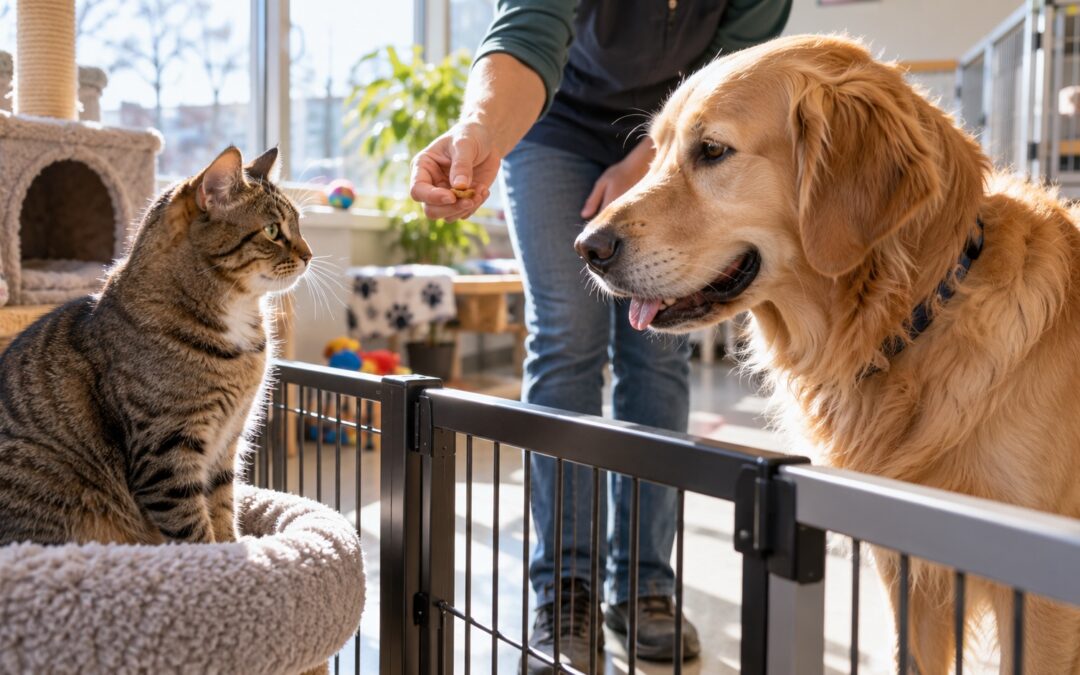
Eighty-four cats are getting a second chance this week in Greater Boston, and many of them will need someone to take them home. MSPCA-Angell says it took in the cats from a home in Reading after the woman who lived there, a veterinary technician who fostered cats, was found dead on October 8. A small number could be ready for adoption within days. Others need medical care first. If your household already includes a dog, you can still help. Here is what has been confirmed so far, what remains unclear, and how to bring a new cat into a dog home safely.

What we know
On Wednesday, October 14, MSPCA-Angell said its law enforcement team had removed 84 cats from the Reading home and taken them to its shelters. The Boston Globe reported that the cats went to the organization’s adoption centers in Boston and Methuen. MSPCA-Angell said the cats have a range of medical needs. Cats that need treatment will get it before they go up for adoption. A few could be available this week, and the rest will stay in shelter care for now.
The organization did not name the woman. It described her as part of the local rescue community and said she had opened her home to foster cats. The Globe and Boston.com identified her as Andria Hanafin, 49. The Globe reported that peers knew her for taking in cats that had complex medical needs or trouble trusting people. Her 22-year-old son has been charged with first-degree murder and other offenses. Boston.com reported that a not-guilty plea was entered for him at his arraignment in Woburn District Court on October 15, and that he is being held without bail. He is presumed innocent unless proven guilty.
MSPCA-Angell said it was already caring for many cats before this group arrived, and that the sudden surge has strained its staff and resources. Chris Schindler, the organization’s director of law enforcement, put it simply: “we really need help from the community.”
What is still unclear
Some details are still unsettled, and we will update this story if they change.
- The count. Reading police first estimated 20 to 30 cats and kittens in the home. MSPCA-Angell’s figure is 84. The Globe said a spokesperson for the district attorney’s office could not be reached to explain the gap.
- Which cats are available, and when. MSPCA-Angell has not published a list. Its spokesperson told the Globe the organization had nothing to add beyond its statement. The safest approach is to check the adoption pages directly and not assume a particular cat is ready.
- Adoption fees or special events. No fee changes tied to these cats have been announced.
Have a dog? You can still adopt a cat
Many dogs live happily with cats. A good first week depends on going slowly. The guidance below follows Maddie’s Fund’s widely used shelter advice on dog-and-cat introductions. Ask the adoption counselor to help you match the cat to your dog’s energy level.
- Start separated. Keep the new cat behind a closed door for at least a few days. Swap bedding or rooms so each pet gets used to the other’s scent before they meet.
- Tire the dog out first. A long walk before the first meeting takes the edge off.
- Leash the dog, not the cat. Let the cat move freely while your dog stays leashed. Reward your dog for looking at you instead of fixating on the cat.
- Give the cat a way out. Set up high perches, cat trees and quiet hiding spots your dog cannot reach. A cat that can escape is calmer.
- Keep sessions short and supervised. If either pet gets tense, end the session and try again later with more distance or a baby gate between them. Keep them apart whenever you are not home.
- Do not scoop up a scared cat. Holding a frightened cat can get you badly scratched or bitten. Let it retreat instead.
If your dog stays very intense around the cat, talk to the shelter, a positive-reinforcement trainer or a veterinary behaviorist before you try again.
Other ways to help
Adoption is not the only way to help. MSPCA-Angell is asking for help in four ways: adopting, fostering, volunteering and donating to its pet care assistance fund. Fostering is especially useful when a shelter suddenly fills up. Even a few weeks of a quiet spare room can give a cat a calm place to recover while it waits for a permanent home. Links are in the Sources section below.
Fenway’s Take
Hi, friends. Fenway the Pup here. I don’t know these cats, but I know what a strange new place smells like, and I know how much a calm, kind person helps. Here is my advice from the dog’s side of the door. First, let your dog hear and smell the new cat for a while before they meet. Curiosity is easier to handle than surprise. Second, have treats ready at every meeting so your dog learns that “cat in the room” means good things happen. Third, if a cat already lives with you, think about whether your house can comfortably fit one more pet before you say yes. If it can’t right now, fostering, sharing an adoption post or giving a little money to the pet care fund still helps. And to everyone who fosters animals quietly and without thanks: you are the reason a lot of us get home.
Quick quiz: cats, dogs and this week’s news
Tap an answer to check it. Your score shows up after the last question.
Let’s talk
- If you have both a dog and a cat, how did their first week together go, and what would you do differently?
- What would make fostering easier for you: supplies, shorter commitments, or advice from people who have done it?
- How can neighbors and local rescues work together to spot a foster home that is getting overwhelmed before it becomes a crisis?
From the network
Boston Made ReaderMore local stories from around the Boston Made network.
Boston MadeThe home of the Boston Made family of brands.
Sources
- MSPCA-Angell: MSPCA-Angell Cares for More than 80 Cats Surrendered from Reading Home (Oct. 14, 2026)
- The Boston Globe: MSPCA-Angell says it has received 84 cats from a Reading home (Oct. 14, 2026)
- Boston 25 News: 84 cats surrendered from home of Reading woman found dead (Oct. 14, 2026)
- Boston.com: 84 cats surrendered from Reading home where woman was found dead, MSPCA says (Oct. 15, 2026)
- Boston.com: Reading man held without bail after pleading not guilty (Oct. 15, 2026)
- Maddie’s Fund: Introducing your new dog to cats
- MSPCA-Angell: Adopt a cat · Foster · Volunteer · Pet care assistance fund
- Wikimedia Commons: Cat November 2010-1a.jpg (photo)