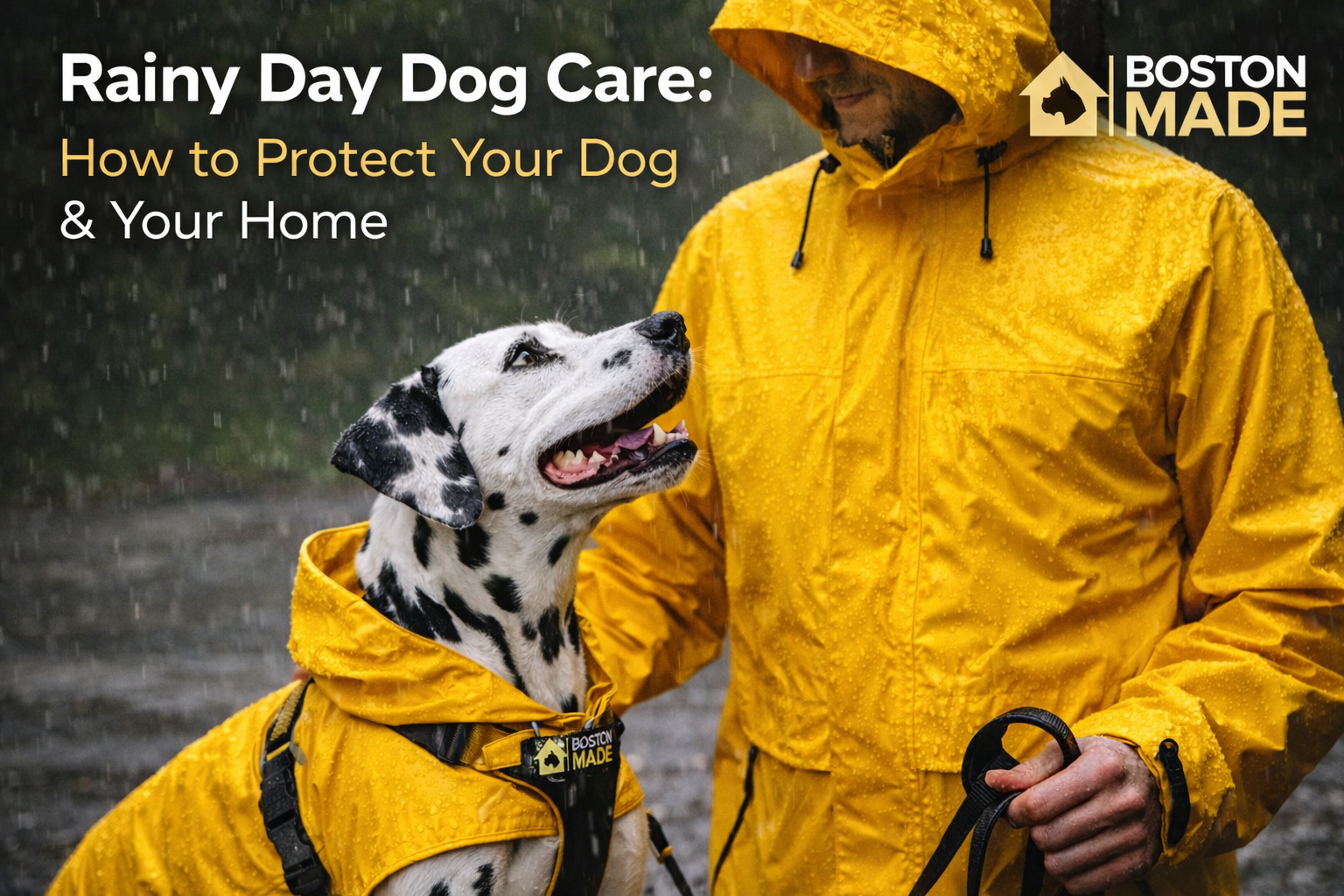
New England winters are not gentle on dog paws.
Rock salt, ice-melt chemicals, packed snow, and cold pavement all take a toll — and most dogs cannot tell you it hurts until it already does.
1. Rinse paws after every walk
Sidewalk salt and de-icing chemicals cling to paw pads and get licked off later. A quick rinse with warm water after every winter walk keeps it out of your dog’s system.
2. Check for cracks and ice balls between the toes
Long-haired breeds especially can build up small ice balls between their toes. Left alone, they turn into painful cracks. A quick paw check after each walk catches it early.
3. Use a paw balm before you head out
A thin layer of paw balm or wax creates a barrier against salt and cold pavement — similar to how you’d use lip balm before heading into the wind.
4. Trim the fur between paw pads
Shorter fur between the pads means less snow and ice clumping there in the first place. It’s a two-minute trim that saves a lot of discomfort.
5. Know when it’s just too cold
If the ground is too cold for your bare hand to rest on comfortably for five seconds, it’s too cold for your dog’s paws. Keep walks shorter on the coldest days, and consider dog boots for extended time outside.
Every one of these habits takes just a minute or two, and they add up to a much more comfortable winter for your dog.